

What Vero Beach Patients Should Know about The Cost of Dental Crowns
 If your dentist just told you that you need a dental crown, chances are your very next question was, “How much is this going to cost me?” It’s a fair question and one that deserves a straight answer instead of a vague “it depends.”
At Vero Beach Dental Care, your dentist in Vero Beach, CA, Dr. Morgan Clay and our team hear this question all the time. Dental crowns are one of the most common restorative procedures out there, but the price tag can feel like a mystery until someone actually walks you through it. To learn more about the cost of dental crowns, contact our Vero Beach dental office by calling (772) 770-2225.
How Vero Beach Dental Care Makes Crowns More Affordable
We know cost is a real concern, so our Vero Beach dental office does everything we can to make treatment accessible. Dr. Morgan Clay and our team will walk you through your financing options before any work begins, explain exactly what your insurance covers, and talk through payment plans if you need them. There are no surprise bills and no pressure. Just honest guidance so you can make the decision that’s right for your smile and your budget.
We’re pleased to offer our patients CareCredit, which lets you begin your treatment immediately and then pay for it over time with low monthly payments that fit into your monthly budget. No-interest financing is available if paid off within 12 months, and there are no up-front costs, pre-payment penalties, or annual fees. Please contact our office to learn more about these financing options, or to apply for CareCredit.
We’re proud to serve patients not only in Vero Beach but throughout the surrounding communities, including Sebastian, Fellsmere, Wabasso, Indian River Shores, Fort Pierce, and Melbourne. Wherever you’re coming from, our goal is the same: quality dental care without the guesswork.
Types of Crowns and Why the Type Affects the Price
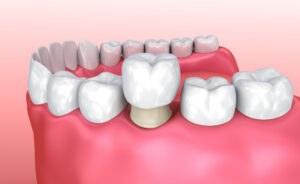 One of the biggest reasons crown pricing varies so much from patient to patient is that it isn’t just one product. There are several different materials and fabrication methods, each with its own cost, appearance, and durability profile.
Porcelain-fused-to-metal (PFM) Crowns – These combine a metal substructure for strength with a porcelain outer layer for a natural look. They’ve been a trusted option for decades and tend to fall in the mid-range price bracket. The tradeoff is that over time, a thin dark line can sometimes become visible at the gumline as gums shift.
Ceramic or Porcelain Crowns – These are prized for being the most cosmetically convincing option, since light passes through them somewhat like it does natural enamel. They’re a popular choice for front teeth where appearance matters most, and they typically sit at a higher price point than PFM crowns because of the materials and lab work involved.
Zirconia Crowns – Zirconia has become increasingly popular because it combines impressive strength with a fairly natural appearance. It’s an excellent choice for molars that take on heavy chewing forces, and many patients like that it can sometimes be milled and placed in a single office visit using in-office CAD/CAM technology. Pricing is generally comparable to or slightly above all-ceramic crowns.
Gold or Metal Alloy Crowns – These are the old reliable of the crown world. They’re extremely durable, kind to the opposing teeth during chewing, and rarely chip or crack. Because they’re not tooth-colored, they’re usually reserved for back molars where they won’t be visible. Cost fluctuates with metal market prices, but they’re often comparable to or higher than PFM options.
Same-Day CEREC Crowns – Some dental offices, including practices using in-house milling technology, can design and mill a ceramic crown in a single appointment rather than sending an impression out to a lab. This convenience can sometimes affect pricing slightly, but it saves you the hassle of a temporary crown and a second visit.
What Determines the Final Cost of a Dental Crown?
Beyond the material itself, several other factors combine to determine your final price:
Location and Complexity of the Tooth – A crown on a front tooth, where appearance and a seamless blend with neighboring teeth matter most, may involve more detailed shading and lab work than a crown on a molar built purely for chewing strength.
Whether Additional Treatment is Needed First – Sometimes a tooth needs a root canal, a core buildup, a filling, or gum treatment before it’s healthy enough to support a crown. Each of these steps adds to the overall cost of the process, so the crown itself is really just one piece of a larger treatment plan.
Diagnostic Imaging and Planning – X-rays, digital scans, and a thorough exam are typically part of the process to make sure the crown fits precisely and the tooth underneath is properly prepared.
Lab Fees – Unless your crown is milled same-day in the office, it’s custom-fabricated at a dental lab based on impressions or digital scans of your mouth. Lab costs vary depending on the material and the level of craftsmanship involved.
Dental Insurance Coverage – Many insurance plans cover a portion of crown costs, especially when the crown is medically necessary rather than purely cosmetic, though the percentage covered and any annual maximums will affect your out-of-pocket total.
Generally speaking, dental crowns can range anywhere from several hundred to well over a thousand dollars per tooth, depending on the combination of these factors. The best way to get an accurate number for your specific situation is a consultation.
What Happens During a Crown Procedure at Our Vero Beach Dental Office
Understanding the process itself can help explain where the cost comes from. A traditional crown typically takes two appointments:
Visit one: Preparation – Dr. Morgan Clay will first examine and, if needed, take X-rays of the tooth and surrounding bone to check for decay or infection that could affect the plan. The tooth is then numbed, and any decay is removed. The tooth is reshaped to make room for the crown, and an impression or digital scan is taken to serve as the blueprint for your custom crown. A temporary crown is placed to protect the tooth while your permanent one is being made.
In between visits – Your impression or scan is sent to a dental lab, where technicians craft your crown to match the exact shape, size, and shade of your natural teeth. This typically takes one to two weeks, though same-day technology can shorten this significantly for eligible cases.
Visit two: Placement – Once your permanent crown arrives, the temporary is removed, the fit and bite are checked and adjusted as needed, and the crown is permanently cemented into place. From there, it functions just like a natural tooth.
How to Make a Crown More Affordable Without Cutting Corners
 Cost concerns are real, and there are legitimate ways to manage them without compromising the quality of your care:
Use Your Dental Insurance Strategically – If you have coverage, understanding your annual maximum and timing your treatment within your plan year can make a real difference.
Ask about In-House or Third-Party Financing – Many dental offices, including ours, offer payment plans or financing partnerships that let you spread the cost over several months.
Consider Treatment Timing – If you need multiple crowns, discussing a phased approach with your dentist can sometimes help spread out the financial impact.
Don’t Skip Preventive Care – Regular checkups and dental cleanings catch small issues before they become the kind of large problem that requires a crown in the first place, which is one of the most effective ways to avoid this expense altogether.
Ask Questions Upfront – A detailed cost breakdown before treatment begins means no surprises on the back end.
Frequently Asked Questions
In many cases, yes, especially when the crown is needed for a functional reason, like restoring a tooth after a root canal or repairing significant decay. Coverage amounts vary widely between plans, though, often falling somewhere between 50% and 80% after your deductible, and many plans also cap the amount they’ll pay per year. So it’s always best to check your specific benefits. Our team at Vero Beach Dental Care is happy to help verify your coverage before treatment begins so there are no surprises.
Crown pricing depends on several individual factors: the material chosen, the condition of the tooth, whether any prep work like a root canal or buildup is needed first, the complexity of matching the crown to surrounding teeth, and your insurance situation. Two patients getting a crown at the same office might end up with different costs simply because their teeth needed different levels of care beforehand.
It can be tempting to go with the lowest-cost option, but crowns are a long-term investment in your oral health. Lower-cost materials may not last as long or hold up as well under normal chewing pressure, which could mean paying for a replacement sooner than expected, essentially doubling the cost over time. Dr. Morgan Clay will always recommend the option that offers the best long-term value for your specific tooth, bite, and budget, rather than simply the cheapest option on the menu.
A well-made, properly cared-for crown can last anywhere from 10 to 15 years, and many last even longer with good habits. When you think about cost per year of use, a quality crown often works out to be a smart investment rather than an added expense. Good oral hygiene, avoiding habits like chewing ice or grinding your teeth, and regular checkups at your Vero Beach dental office go a long way toward maximizing that lifespan and protecting the money you’ve put into it.
Get the Right Dental Crown for Your Smile and Budget!
At the end of the day, the only way to know exactly what your crown will cost is to sit down with a dentist who can actually look at your tooth, review your insurance, and talk through your options honestly. Guessing based on averages online just leaves you with more questions, and every tooth tells a slightly different story.
If you’re in Vero Beach, Sebastian, Fort Pierce, Fellsmere, Wabasso, Indian River Shores, Melbourne, or anywhere nearby, Dr. Morgan Clay and the team at Vero Beach Dental Care are ready to give you real, personalized answers. Contact our Vero Beach dental office by calling (772) 770-2225 to schedule your consultation. Your smile, and your budget, will thank you.